


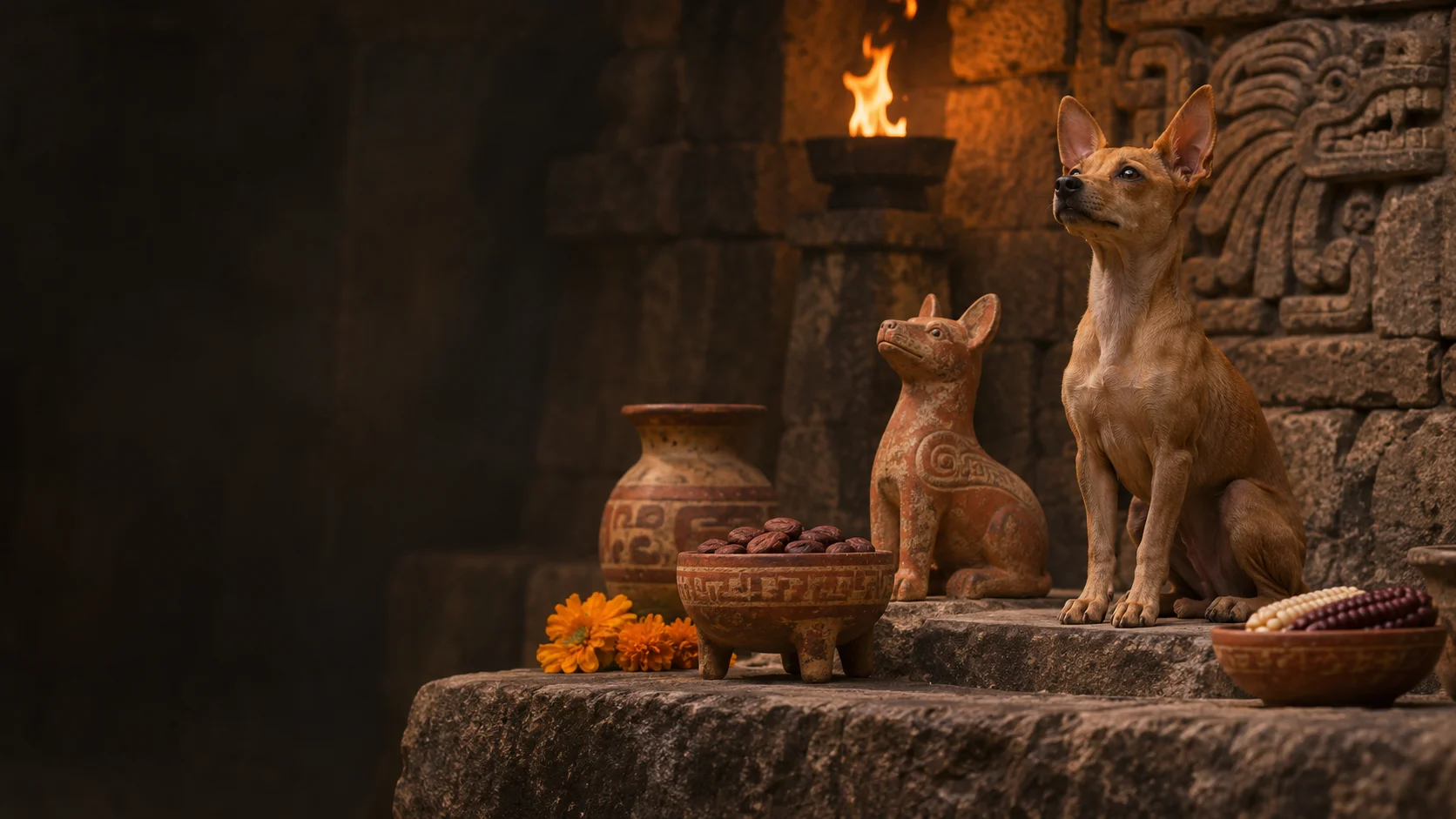
Why did the Aztecs bury dogs with the dead?
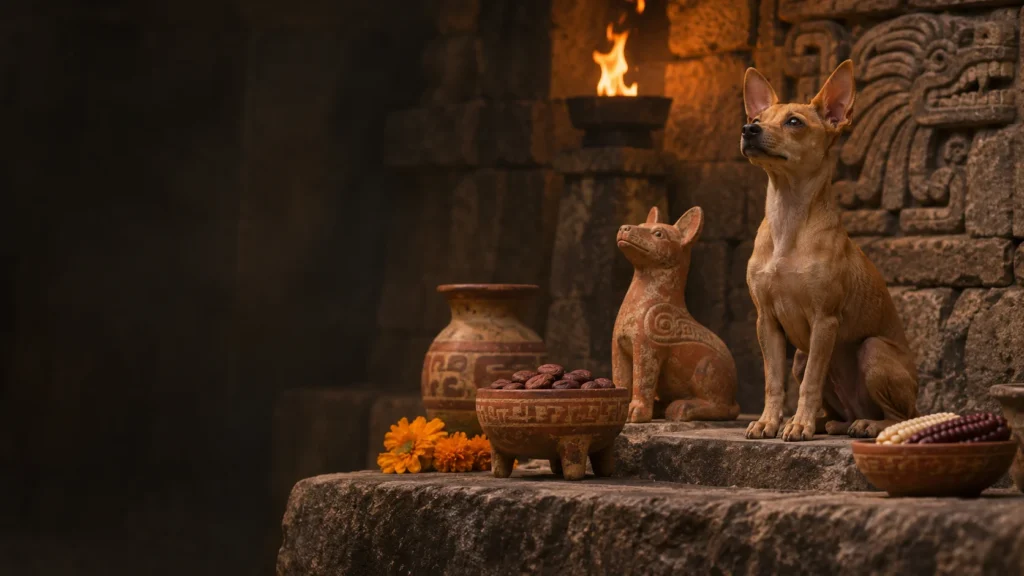
Dogs appear in Mesoamerican funerary contexts because of their symbolic and practical roles. In some traditions they were believed to accompany humans after death.
What do historical records tell us?
Bernardino de Sahagún’s colonial-era accounts are important sources for understanding Nahua beliefs, including a passage in which a dog helped the deceased cross water.
Burials, cremation and offerings
Breed histories describe dogs associated with human burials or cremations. Archaeological contexts also contain canine figures. Practices differed across periods and communities and cannot be generalized to every Aztec family.
Were dogs also eaten?
Historical and archaeological evidence documents consumption of dogs in some settings, including ceremonies. This does not mean all dogs were used this way or that the animals involved were direct ancestors of today’s Chihuahuas.
Can ancient dogs be identified as Chihuahuas?
Researchers compare skeletal remains, archaeological context and historical records. Small size alone is not enough to establish the identity of a Techichi or a modern breed.
Sources
INAH funerary study
Mesoamerican dog archaeology
AKC breed history
Read more: Chihuahua origins and history.
Potrebbe interessarti anche

Quando guardi un Chihuahua, in realtà stai ammirando un lupo domestico: boom di diversità nei cani già 10.000 anni fa
Leggi la guida
Origini e Storia del Chihuahua: Dalle Piramidi del Messico a Hollywood – La Storia Segreta del Cane Più Piccolo (e Antico) del Mondo
Leggi la guida